Society · Indian Society · Lesson 6 of 7 · 13 sections · about 25 min read
Based on: NCERT Class XII Social Change and Development in India (Globalisation and Social Change) and Contemporary World Politics (Globalisation); IGNOU sociology material (eGyanKosh); Anthony Giddens, Sociology; Arjun Appadurai, Modernity at Large (1996); George Ritzer, The McDonaldization of Society (1993); NITI Aayog, India's Booming Gig and Platform Economy (2022); Ministry of Commerce trade data 2024-25; RBI balance of payments data 2025-26; PIB releases on the Labour Codes
Globalisation: meaning and dimensions
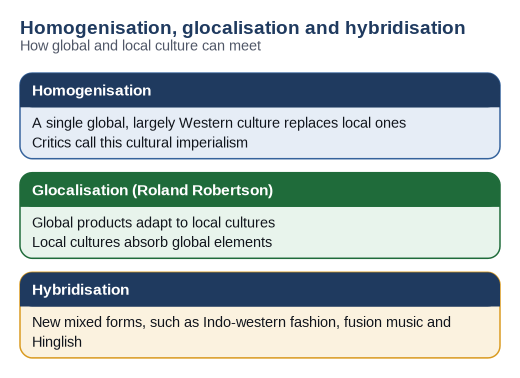
In plain words: Globalisation is the growing interconnection of the world through flows of goods, services, capital, people, technology, information and ideas. Giddens defined it as the intensification of worldwide social relations, so that local events are shaped by happenings far away. Harvey called the shrinking of distance by technology time-space compression. The table sets out five dimensions, economic, technological, cultural, political and demographic, with Indian examples. The section ends with the lenses sociologists use to read the cultural effects.