Geography · Physical geography of India and the World · Lesson 11 of 12 · 11 sections · about 23 min read
Based on: NCERT Class XI India Physical Environment (Soils; Natural Vegetation); NCERT Class X Contemporary India II (Resources and Development); Champion and Seth, A Revised Survey of the Forest Types of India (1968); Forest Survey of India, India State of Forest Report 2023 (PIB, 21 December 2024); ISRO SAC Desertification and Land Degradation Atlas
Soil: formation and classification
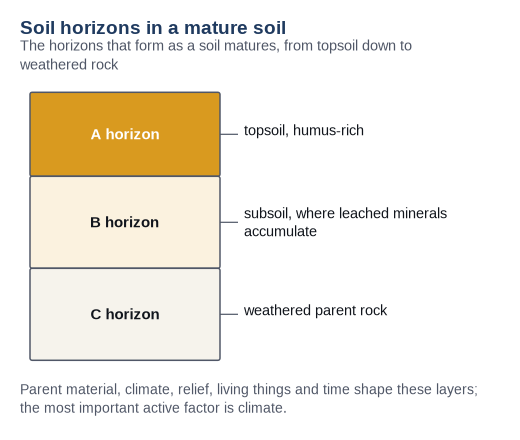
In plain words: Soil is the thin layer of loose material on the Earth's surface, made of weathered rock particles, humus, water and air, and it takes hundreds to thousands of years to form even a few centimetres. Five factors shape it: the parent material, the climate, the relief, living things and time. Mature soils develop layers called horizons, from humus-rich topsoil at the top down to weathered parent rock at the bottom.
Soil is the thin layer of loose material on the Earth's surface made of weathered rock particles, humus (decayed organic matter), water and air. It takes hundreds to thousands of years to form a few centimetres of soil.